
Symptom
Perimenopause muscle aches and joint pain
Aching muscles and stiff, sore joints are among the most common perimenopause symptoms and among the least talked about. UK national guidance lists musculoskeletal symptoms, giving joint and muscle pain as the example, among the symptoms commonly associated with menopause. It is a recognised part of the picture, not a coincidence of getting older.
Free. No email required. No signup required. Takes about 2 minutes. Scored entirely in your browser: your answers are never stored or sent anywhere. Your score is shown next to the average for your age band.
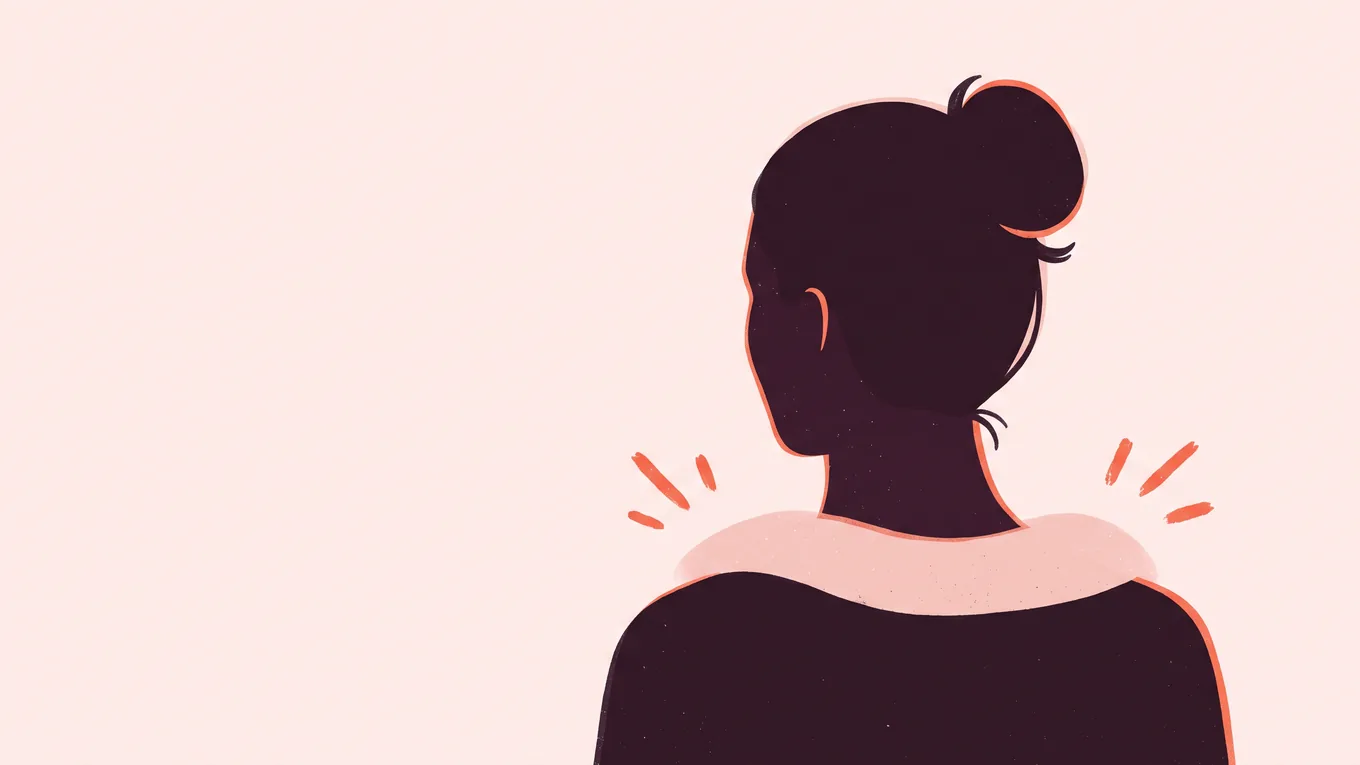
Why falling oestrogen aches
Oestrogen receptors are present in muscle, tendon, ligament, cartilage and bone. Oestrogen has anti-inflammatory effects and plays a part in how connective tissue maintains and repairs itself. As levels fall and fluctuate through the transition, that support becomes inconsistent.
The practical result is tissue that is a little more inflamed, a little slower to recover, and a little less tolerant of load than it was. People describe waking stiff, taking longer to get going, aching after activity that never used to cost anything, and a general soreness that moves around rather than sitting in one joint.
It is easy to attribute this entirely to age, and the timing makes that hard to argue with. What points towards the transition is the pattern: soreness that arrived alongside cycle changes, that moves between sites, and that is accompanied by the other symptoms rather than sitting alone.
What it typically feels like
- Morning stiffness that eases as you moveCommonly worst on waking and better within half an hour of being up. Stiffness lasting well over an hour is a different signal and belongs in the section below.
- Pain that migratesShoulders one month, hips and hands the next. Inflammatory arthritis tends to be more consistent about which joints it affects and more symmetrical.
- Recovery that takes longer than it used toThe same walk or the same session costs two days instead of one.
- Frozen shoulder specificallyPainful, progressively restricted shoulder movement is notably more common in women in this age range and is worth naming rather than enduring, because early treatment matters.
What is worth ruling out
Several conditions produce widespread aching and have specific treatments, so they are worth excluding rather than assuming hormones.
| Cause | What points to it |
|---|---|
| Underactive thyroid | Aching with fatigue, cold intolerance, weight change, constipation. A simple blood test settles it. |
| Vitamin D deficiency | Diffuse muscle aching and weakness, more likely with limited sun exposure. Also simple to check. |
| Statins and some other medicines | Aching that began after starting or increasing a medicine. Worth reviewing rather than stopping unilaterally. |
| Polymyalgia rheumatica | Usually over 50. Marked shoulder and hip girdle pain and stiffness, worse in the morning and lasting well beyond an hour, often with feeling unwell. Needs assessment. |
| Inflammatory arthritis | Swollen, warm or red joints, symmetrical involvement, prolonged morning stiffness. Early treatment changes outcomes, so this should not be watched and waited. |
| Iron deficiency | Aching with fatigue and breathlessness, especially alongside heavy periods, which are common in this phase. |
The presence of one of these does not exclude the transition. Both can be true, and treating the treatable one usually makes the rest easier to judge.
What helps
- Load, applied graduallyResistance training is the intervention with the best case behind it for maintaining muscle and bone through this period. National guidance specifically flags maintaining muscle mass and strength through physical activity. Starting lighter than feels necessary and building slowly matters more here than it used to.
- Do not stop moving because it achesThe instinct to rest tends to make musculoskeletal pain worse over weeks. Reducing intensity while keeping frequency usually beats stopping.
- Treat the sleepPain tolerance falls with broken sleep, so night sweats make the aching worse in a way that is easy to miss.
- Get the simple bloods doneThyroid, vitamin D and iron are cheap to check and genuinely change what happens next.
If the aching arrived with other changes, the whole pattern is more informative than any single part. Our check scores nineteen symptoms and stages your cycle against the STRAW+10 criteria, and prints a summary for an appointment.
When to get it looked at
See a clinician for joints that are visibly swollen, warm or red; morning stiffness that lasts well over an hour; pain with fever, weight loss or feeling generally unwell; genuine muscle weakness rather than pain-limited movement; a single severely painful joint; or new marked shoulder and hip girdle pain and stiffness over the age of 50.
These are assessment routes, not product routes, and nothing here is monetised.
Sources
- National Institute for Health and Care Excellence. Menopause: identification and management. NICE guideline NG23, published November 2015, last updated November 2024. Recommendation 1.2.2 names musculoskeletal symptoms, for example joint and muscle pain, among symptoms commonly associated with menopause. Recommendation 1.2.5 covers maintaining muscle mass and strength through physical activity.
- Harlow SD, Gass M, Hall JE, et al. Executive summary of the Stages of Reproductive Aging Workshop +10: addressing the unfinished agenda of staging reproductive aging. Menopause 2012;19(4):387 to 395.
Common questions
Can perimenopause cause muscle aches?
Yes, and it is recognised in national guidance rather than anecdotal. NICE guideline NG23 lists musculoskeletal symptoms, giving joint and muscle pain as its example, among the symptoms commonly associated with menopause. Oestrogen has anti-inflammatory effects and receptors throughout muscle, tendon and joint tissue, so falling levels affect how those tissues cope and recover.
Why does my whole body ache in perimenopause?
Because the tissues involved are widespread. Oestrogen receptors are present in muscle, tendon, ligament, cartilage and bone, so declining and fluctuating levels produce diffuse rather than localised aching, often moving between sites. Broken sleep from night sweats lowers pain tolerance on top of that.
Is joint pain a sign of perimenopause?
It is a common accompaniment rather than a sign on its own. Joint pain has many causes, several of which are treatable and worth excluding, including underactive thyroid, vitamin D deficiency, inflammatory arthritis and, over 50, polymyalgia rheumatica. What points towards the transition is aching that arrived alongside cycle change and other symptoms.
Will perimenopause joint pain go away?
It varies, and honestly the evidence is not strong enough to promise either way. What is reasonably well supported is that maintaining muscle strength through resistance training helps, that continuing to move beats resting, and that treating contributors such as thyroid problems, low vitamin D and disrupted sleep changes how much it costs you.
What helps perimenopause muscle and joint pain?
Gradual resistance training has the best case behind it, and national guidance specifically flags maintaining muscle mass and strength through physical activity. Reducing intensity while keeping frequency beats stopping. Treating night sweats helps by protecting sleep. And checking thyroid function, vitamin D and iron is cheap and sometimes changes the answer entirely.
Keep going
 The 2-minute perimenopause checkNineteen scored symptoms, your stage, and a printable doctor summary. Free, no email.
 Perimenopause headachesWhy migraine worsens when oestrogen swings, and the aura rule that affects contraception.
 Itchy ears in perimenopauseWhy falling oestrogen dries the skin lining the ear canal, and what else causes it.
 The stages of menopauseEvery STRAW+10 stage, what defines it, and where perimenopause starts and ends.
One symptom is not the picture
A single symptom says very little on its own. Scored alongside fifteen others and your cycle pattern, it becomes something a clinician can act on.
You are not imagining it, and it is not too small to mention.
Take the 2-minute checkFree, no email, no signup. Scored entirely in your browser. Screening, not diagnosis.